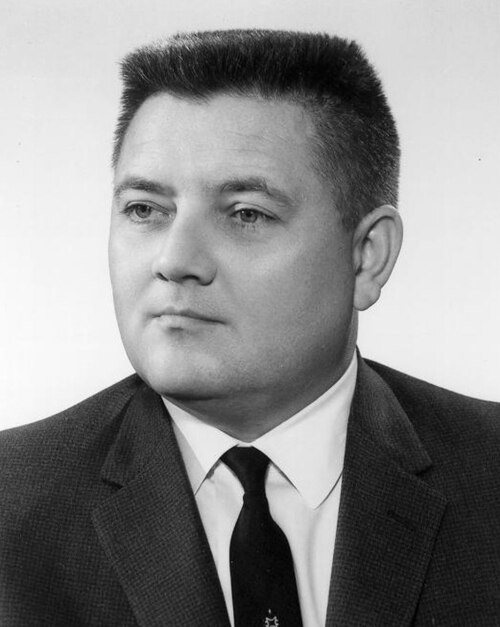
- Born
- 5 July 1922
- Died
- 30 April 1998
- Country
- United States
- Field
- physicist, statistician, mathematician
- In the library
- 1 work, named in 5 passages elsewhere
- Facts from
- Wikidata · Wikipedia · Open Library
Maximum entropy in active inference
Friston and colleagues tie Jaynes's maximum entropy principle to exploration. When an agent holds flat prior beliefs that all final states are equally valuable, it keeps its options open and maximizes entropy over those states. They say this fits expected utility theory.1 Palacios and colleagues apply the same principle to Markov blankets.
Inference applied to organisms
Katz and Springer cite Jaynes's 2003 book when they propose that adaptation to changing environments can be framed as inference under uncertainty. They build this into a strategy for microbial growth, illustrated with glucose and galactose in yeast.3 Campbell lists the same book among works that use equivalent mathematical forms for evolutionary change, here under culture, alongside biology and neuroscience.5
in other words, it will explore according to the maximum entropy principle (Jaynes, 1957).
Friston K, Schwartenbeck P, Fitzgerald T, Moutoussis M…, 2013 · The anatomy of choice: active inference and agency · open at passage 34internal states will reduce free energy by parameterising a variational density over external states with maximum entropy; in accordance with Jaynes’ principle of maximum entropy (MacKay, 2003).
Palacios ER, Razi A, Parr T, Kirchhoff M, Friston K, 2020 · On Markov blankets and hierarchical self-organisation · open at passage 33We propose that adaptation to changing environments can be framed as inference under uncertainty (Jaynes, 2003).
Katz Y, Springer M, 2016 · Probabilistic adaptation in changing microbial environments · open at passage 12The consensus Bayesian position is that probability theory only describes inferences made by humans. As Jaynes put it (Jaynes, 1988):
Campbell JO, 2016 · Universal Darwinism As a Process of Bayesian Inference · open at passage 43evolutionary change in biology (Gardner, 2008; Frank, 2012b), neuroscience (Friston, 2010; Fernando et al., 2012) and culture (Hull, 1988; Jaynes, 2003; Mesoudi et al., 2006; Gintis, 2007).
Campbell JO, 2016 · Universal Darwinism As a Process of Bayesian Inference · open at passage 57

