A Feeling for the Organism: The Life and Work of Barbara McClintockKeller, E. F.
1983
1983
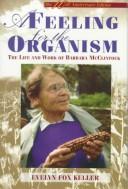
Evolution and evolvability · Book
A Feeling for the Organism: The Life and Work of Barbara McClintock
- Published
- 1983
- In the library
- Described, not held
- Rights
- In copyright. The library holds a record, not the text.
- Why it is here
- On Michael Levin's list of inspirations
What the held texts say about it
The held works use Keller's biography of McClintock as a source for her views and for how her work was received. Trewavas cites it for dogmatic resistance to her transposon observations, her advice to hold on to ideas, her treating cells and organisms as one, and her view of the cell, not the gene, as life's basic element. Noble cites it for the genome as a sensitive organ of the cell, reorganized in response to challenges.
Dogmatic voices tried to see her observations destroyed (Keller 1983. p8-10).
Trewavas A, 2025 · Plant intelligence dux: a comprehensive rebuttal of Kingsland and Taiz · open at passage 38
In McClintock’s view, the cell, not the gene, is the basic element of life.
Trewavas A, 2025 · Plant intelligence dux: a comprehensive rebuttal of Kingsland and Taiz · open at passage 41
“Organism” is for her a code word, not simply a plant or animal.
Trewavas A, 2025 · Plant intelligence dux: a comprehensive rebuttal of Kingsland and Taiz · open at passage 39
Cited by 2 held works
| 2025 | The Multiscale Wisdom of the Body: Collective Intelligence as a Tractable Interface for Next-Generation… · Levin M | 10,069 words |
| 2025 | Plant intelligence dux: a comprehensive rebuttal of Kingsland and Taiz · Trewavas A | 7,593 words |